
The benchmark National Stock Exchange Nifty has rallied 4 per cent, or 750 points, from this month's low to end at 19,732 on week ending November 17. Technical analysts say the market could consolidate around the current levels as it is nearing the resistance zone. "The near-term uptrend status of the market remains intact, but there is a possibility of some more consolidation or minor weakness for the Nifty in the next one to two sessions.

The Indian equity markets have significantly increased in importance within the emerging market (EM) basket of stocks in recent years. Since 2018, India's weighting in the Morgan Stanley Capital International (MSCI) EM Index - tracked by passive funds with assets of nearly $500 billion - has doubled, while the number of domestic stocks has grown by almost 70 per cent.

IndusInd Bank, Suzlon, and Paytm will remain under focus, as the stocks are pegged to get added to the MSCI global standard index. These stocks, along with six others, are seen attracting cumulative inflows of nearly $2 billion from passive funds tracking MSCI indices. Persistent Systems, APL Apollo, Polycab, Macrotech Developers, Tata Motors DVR, and Tata Communication are the other six stocks that will be added to the MSCI index, shows an analysis done by Nuvama Alternative & Quantitative Research.

Diwali fireworks are expected to continue on Dalal Street next week, with four companies collectively seeking to mobilise over Rs 6,600 crore through initial public offerings (IPOs). In terms of the amount raised, this is poised to be the busiest week of calendar year 2023. Tata Technologies (Tata Tech), a subsidiary of Tata Motors, could lead the charge with an IPO projected to be over Rs 2,900 crore. This will mark the first maiden share sale by a Tata Group firm in nearly two decades.

The board of Religare Enterprises Ltd (REL) has rallied behind its embattled chairperson Rashmi Saluja, saying she had turned around the financial services company whose market cap has increased to about a billion dollars from under $100 million in March 2018. The board -- which is fending off an Rs 2,200 crore open offer by the Burman family -- said accusations had not only targeted Saluja but the entire Religare management that has made Religare debt free. "Our story has been one of resurgence under the guidance of the Board of Directors led by Saluja, executive chairman.
In the current calendar year, small and medium enterprises (SMEs) have witnessed an impressive surge in initial public offerings (IPOs), surpassing the 2018 record. Over 150 SME IPOs have been introduced to the market, breaking the previous record of 141 set in 2018. According to data from PRIME Database, a primary market tracking firm, 147 companies successfully concluded their debut share sales by the end of October, raising a cumulative Rs 3,727 crore.

The Burman family, which runs Dabur Group, has denied any involvement or role in an illegal cricket-betting app as alleged by the Mumbai police in a complaint filed last week. The family said vested interests were behind the police complaint and they wanted to scuttle their (Dabur's) move to acquire Religare Enterprises, a financial services company. "We have not received any formal communication on any such FIR

South Korea's move to ban stock short-selling may further delay its quest to bag an 'upgrade' to 'developed market' status from global index provider MSCI, said analysts. South Korea will prohibit stock short-selling until June 2024 to allow its regulators to "actively" improve rules and systems. South Korea is currently classified as an 'emerging market (EM)' alongside India, China and Taiwan in MSCI indices.

This is the case even though the benchmark index is only 5 per cent below its all-time high. The list of stocks trading at a discount primarily consists companies in the automotive, banking, oil and gas, insurance, healthcare, and metal sectors.

Vedanta Resources (VRL), the diversified mining company headquartered in London, is giving final touches to a plan to raise up to $2.5 billion (about Rs 20,800 crore) as debt repayment deadlines near. The company owned by billionaire Anil Agarwal plans to do this by a combination of instruments, including issuing preference shares in the holding company to a slew of offshore investors from West Asia, and taking on another loan to refinance older debt at a higher interest rate. VRL, which is the group's holding company, is also looking to sell part of its 63.71 per cent stake in the Indian listed subsidiary Vedanta Ltd to meet funding requirements, said a banker close to the development.

Foreign banks and private credit funds are queuing up to fund acquisitions by Indian companies who are buying out their local rivals. The Adani Group, Torrent Group, and the Hindujas have approached several foreign banks and private equity (PE) firms to fund their acquisitions. Global investors have about $2 trillion of funds to invest, and about $100 to $150 billion is set aside for India, according to an estimate by JP Morgan.

Capital expenditure by Indian companies is likely to see an uptick in the upcoming quarters as capacity utilisation has surpassed the critical threshold of 75 per cent, and numerous companies have deleveraged their balance sheets, according to analysts. The first quarter of the current financial year has shown improved profitability, driven by a decrease in input prices. This, according to analysts at Care Ratings, should stimulate a revival in the private capex cycle.

The Hinduja group is learnt to be looking at alternative means of financing, including private credit, to fund its Rs 9,661 crore all-cash offer to acquire Reliance Capital. The regulator, Insurance Regulatory & Development Authority of India (Irdai), had earlier rejected the collateral offered by the group to raise funds. The Hinduja group was in talks with Barclays, JPMorgan, Cerberus Capital Management and Apollo Global Management to raise up to $850 million.

Corporate India is busy restructuring - through mergers, demergers and splits. That seems to be the new normal as CXOs and boards brainstorm on how to create assets and value. The pitch rose significantly during the third quarter of this financial year (FY24), translating into $32.9-billion worth of such deals - the highest quarterly total since the HDFC Bank-HDFC merger announced in FY22 Q2.

As many as 31 mainboard IPOs raised a cumulative Rs 26,272 crore in this period, according to Prime Database. During the April-September 2007 bull run, 48 IPOs totalling Rs 21,243 crore were launched. The number of deals in H1FY24 was 2.2 times that of the same period of the last fiscal year, but the amount raised was 26 per cent lower.

Nextbillion Technology (Groww), the venture capital-backed broking platform, has dislodged Zerodha Broking as India's largest brokerage in terms of number of active clients. Groww had 6.63 million active clients at the end of September, as against Zerodha's 6.48 million, ending the latter's long run at the top. AngelOne and RKSV Securities (Upstox) were ranked third and fourth with 4.86 million and 2.19 million active clients, according to data available on the National Stock Exchange (NSE).

Jefferies, IIFL, and JM Financial - none of which were in the top five last year - have now claimed the top spots in the league tables for equity capital markets (ECM) during the first nine months of calendar year 2023 (CY23), a period characterised by small- and mid-sized transactions. This shift marks a significant change, with these firms outperforming the bulge-bracket investment banks. According to data provided by Refinitiv, Jefferies leads the domestic ECM market, having handled share sales worth $2.3 billion, representing 12.4 per cent of the total volume of $18.4 billion for ECM transactions.
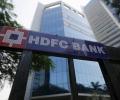
The country's most valuable lender HDFC Bank can perhaps no longer claim to be a favourite of foreign portfolio investors (FPIs). Two data indicators, both somewhat interconnected, point to this - the diminishing premium of HDFC Bank's American depositary receipts (ADRs) compared to local shares, and the ample investment opportunities available to FPIs in the domestic market. The ADR premium has shrunk to below 5 per cent, down from over 30 per cent in March 2021, and even lower than recent levels.
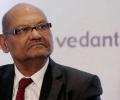
Indian lenders are unlikely to clear the vertical split of BSE-listed Vedanta Ltd in a hurry, considering that the demerger would reduce the fungibility of cash flows across businesses and increase their volatility, according to analysts. The demerger plan, which would result in six separate listed entities, would require approval from shareholders, lenders and other statutory bodies. "We believe that a separate listing of different businesses would reduce the fungibility of cash flows across businesses and increase the volatility of cash flows.
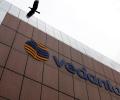
Analysts assert that Vedanta Group's plan to demerge India-listed Vedanta Limited into six listed entities will not resolve the debt problem of its promoter entity, Vedanta Resources (VRL). They suggest that additional asset sales or stake sales by promoters will be necessary to repay the debt. Vedanta is already considering the divestment of its iron-steel division and its copper plant.
 © 2026 Rediff.com - Advertise with us - Disclaimer - Privacy Policy - Sitemap - Feedback - About us - Terms of use - Grievances